



Everything you do online is tracked.
Leave a site without buying? 15 minutes later there's a creepy email in your inbox talking about, “Hey, we noticed you had a croissant with a café au lait and a glass of orange juice for breakfast. You know what would go great with that? Our product.”
Click on an ad by accident and visit a product page for 200 miliseconds before hitting the back button? You'll see ads for that product everywhere you go for the next week.
Almost click “buy,” then hesitate? A pop-up window appears at just the right moment asking you to “SPIN TO WIN!”.
This is behavioral targeting in action. Businesses use it, even though it's giving stalker, because it converts 2 to 5 times better than not using it. Buyers vote with their wallets.
Behavioral targeting tools watch what people do on your site, in your app, or with your emails. Then they use that information to send messages that actually matter to each person. No more sending the same email to everyone. You're sending stuff people care about, when they care about it.
Here's the problem though. Most companies end up juggling three or four different tools to make behavioral targeting work. For example, one tool watches website behavior, another handles email and a third manages mobile push notifications. Yet, none of them talk to each other properly and you spend more time connecting tools than actually improving your marketing.
This guide breaks down the behavioral targeting tools that actually work in 2025. You'll see what makes each one different, who should use them, and how to pick the right one for your business. We cover everything from massive customer data platforms to simple email tools that just work.
TL;DR: Quick Picks by Use Case
Need to pick fast? Here's what each tool does best.
RightMessage - Best for changing website text based on who is visiting. It asks visitors questions to segment them, then automatically swaps headlines and offers to match their answers. Natively integrates with Bento to keep your website and email personalization in sync.
VWO - Best if you want behavioral targeting plus A/B testing for websites and mobile apps. VWO says it helps businesses "implement behavioral targeting by analyzing user actions and delivering tailored digital experiences." Great for serious optimization teams, but it's pricey.
Segment (by Twilio) - Perfect for connecting all your customer data sources into one place. It's basically plumbing for your marketing tools. Segment collects data from everywhere, then sends it wherever you need it. Not a complete solution by itself though. You still need other tools to actually reach customers.
Insider - Powerful if you need behavioral targeting everywhere: web, mobile, email, SMS, you name it. Uses AI to predict who's about to buy or leave. Complex setup and expensive pricing make it better for bigger teams.
Monetate - Built for ecommerce sites that want to show different products to different visitors. It is good at real-time product recommendations based on what people browse. Downside is that pricing isn't public, which usually means it's expensive.
Klaviyo - The go-to for ecommerce email automation. Tracks what people look at, what they buy, what they abandon in carts and then sends targeted emails based on all that behavior. It gets expensive as your list grows since you pay for stored contacts, not just emails sent.
CleverTap - Made for mobile apps. Sends push notifications and in-app messages based on what users do in your app. Great for apps, not so much for websites or email.
Omnisend - Klaviyo's cheaper cousin for smaller ecommerce stores. It does most of the same stuff, but costs less. Free plan works for up to 500 emails per month, while paid plans start at $16/month.
Bento - Email behavioral targeting that actually lands in inboxes. We built in deliverability tools, reputation monitoring, and smart send timing - because the fanciest behavioral targeting doesn't matter if your emails go to spam.
Quick note: these tools do very different things. Some focus on websites, others on email and some try to do it all. Pick based on where your customers actually are and what channels matter most to your business.
Want more background? Check our guides on email automation software and drip email campaigns.
What Are Behavioral Targeting Tools?
Behavioral targeting tools watch what people do on your website, app, or in emails and then they use that information to group people and send them stuff they actually care about. Simple as that.
Think about it this way: someone looks at running shoes on your site, but doesn't buy - you send them an email about those exact shoes the next day. Someone adds three items to their cart then leaves - you show them a 10% off banner when they come back. Someone hasn't opened your emails in two months -you try a different subject line approach or stop emailing them entirely.
This stuff works because people pay attention to things that matter to them. Generic "50% off everything" emails get ignored. However, an email about the exact product someone was just looking at will get opened. A discount code right when someone's about to abandon their cart? That converts.
Of course, behavioral targeting means tracking what people do. You need cookies, tracking pixels, and ways to identify users across sessions. Most tools handle the technical stuff for you, but you still need to think about privacy laws like GDPR and CCPA. Be upfront about what you're tracking and why.
The real power comes when all your tools talk to each other. If someone browses products on your website that data flows to your email tool, which sends a follow-up. They click the email and buy. Your website knows they bought and stops showing them ads for that product. When everything connects, behavioral targeting gets really good.
But here's the thing. Behavioral targeting only works if you have something worth selling and messaging that makes sense. If your product sucks or your copy is confusing, no amount of targeting will save you. Fix the basics first. Then use behavioral targeting to amplify what's already working.
For email campaigns specifically, behavioral targeting needs good deliverability to work. The best targeting in the world is useless if emails land in spam. Check our email deliverability tools guide for more on that.
How to Choose a Behavioral Targeting Tool
Here's what actually matters when picking a behavioral targeting tool.
Where Your Users Are
First question: where do you need behavioral targeting? Most tools are good at one thing: VWO and Monetate do website personalization really well, Klaviyo and Omnisend handle email behavioral targeting, and Insider and Segment try to do everything, which means they're complex and expensive.
Pick a tool that matches where your customers actually hang out. If 80% of your sales come from email, get an email tool, but if your website drives everything, focus there. Don't buy a Swiss Army knife when you need a screwdriver.
Data Integration Needs
Some businesses have customer data everywhere: Website analytics in one tool, email data in another, purchase history in a third and mobile app behavior somewhere else. If that's you, you might need a customer data platform like Segment to connect everything.
But most businesses don't need that complexity. If your data lives in one or two places, a simpler tool probably works better. Klaviyo pulls in ecommerce data just fine and VWO tracks website behavior without needing five other tools.
Real-Time vs. Batch Processing
Real-time sounds fancy, but do you actually need it? For website personalization, yes, you want to show relevant content while someone's browsing. For email? Not really. Sending an abandoned cart email an hour later works just as well as sending it instantly, if not even better.
Pick based on actual needs, not marketing buzzwords.
Automation Capabilities
Behavioral targeting without automation is just fancy segmentation. You need tools that actually do something with the data. Can you set up triggers when someone views a product three times? Build email sequences based on purchase history? Test different messages for different behaviors?
The best tools make automation easy. If you need a PhD to set up a basic abandoned cart email, find a different tool.
Privacy and Compliance
Tracking behavior means dealing with privacy laws such as GDPR in Europe and CCPA in California. More of these regulations are coming every year your tool needs to handle consent properly, let people opt out, and delete data when asked.
This isn't optional. Getting it wrong means fines, angry customers, and emails that don't get delivered. Make sure your tool takes privacy seriously.
Pricing Model
Behavioral targeting tools charge in weird ways. Some charge per user you track, some charge per email contact, some have flat monthly fees and others charge based on how many events you track.
Watch out for pricing that scales badly. That tool charging $99/month for 5,000 contacts might cost $999/month at 50,000 contacts. Do the math for where you'll be in a year, not where you are today.
What Actually Matters
Most businesses overthink this - you probably don't need a massive customer data platform that costs five figures per month, but you need behavioral targeting that works for your main channel.
Start simple. Pick one channel, get behavioral targeting working there and check results. Then expand if it makes sense. Perfect integration across every channel sounds great in theory. In practice, good behavioral targeting on your best channel beats mediocre targeting everywhere.
Deep Dive: The Best Behavioral Targeting Tools
Here's what each platform actually does, who should use it, and what it costs.
RightMessage: Segmentation and On-Site Personalization
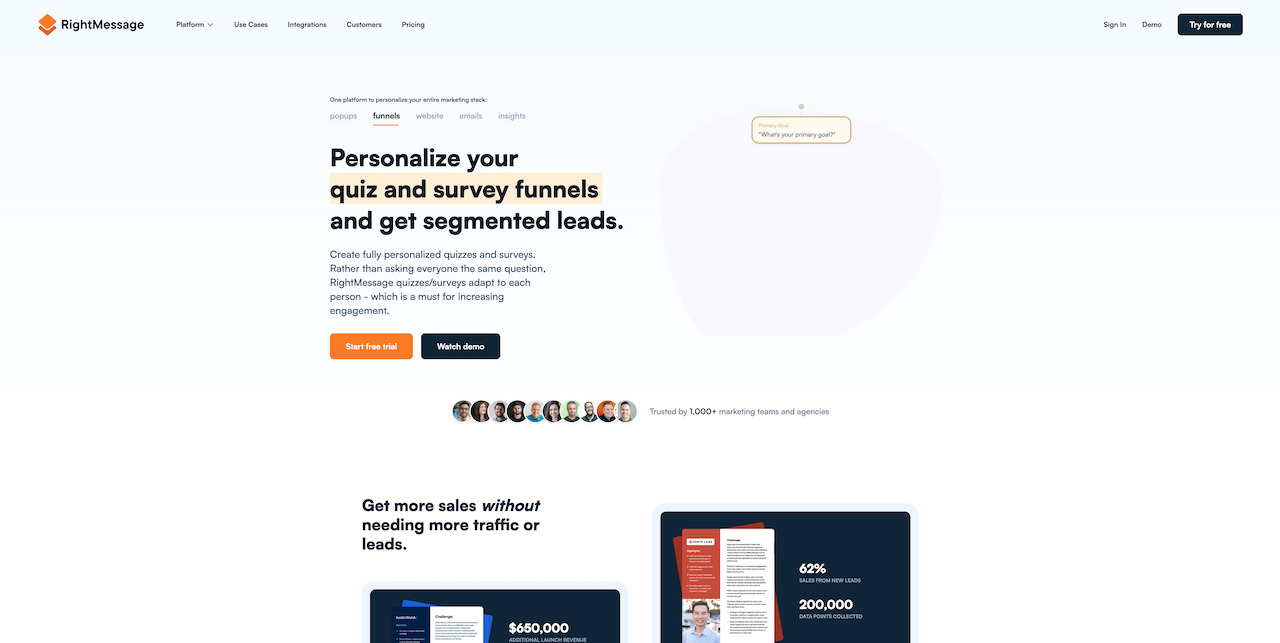
Who it's for: Creators, SaaS companies, and businesses that want to change their website text based on who the visitor is.
What makes it stand out: Most website tools just swap out a hero image or show a popup. RightMessage changes the actual words on your page to match the visitor.
Think about it like this - if a visitor tells you they are a "beginner," your homepage headline automatically changes to speak to beginners; if they tell you they are an "expert," the headline changes to focus on advanced features. You aren't just showing generic offers; you're mirroring their specific needs.
RightMessage is best known for its "CTA Funnels." Instead of annoying everyone with the same email popup, it asks a simple question first ("Are you a designer or developer?"). Based on the answer, it segments them and shows the perfect lead magnet. If they are already a subscriber? It hides the signup form entirely and shows them a product offer instead.
The Bento Connection: Here is where it gets powerful: RightMessage and Bento have a native integration. When RightMessage learns something about a visitor (like their job title or pain point), it instantly tags them in Bento.
This opens up full-stack personalization - a visitor answers a question on your site, RightMessage personalizes the web experience, Bento picks up that data and immediately triggers a personalized email or SMS sequence that matches exactly what they just looked at. Your website, email, and SMS are finally telling the same story.
The downsides: It requires you to know your audience well. The tool gives you the power to change headlines and offers, but you still have to write the copy. If you don't know what to say to your different segments, the tool can't help you. It also sits "on top" of your website, so you need to be comfortable with a visual editor interface.
Bottom line: The best tool for turning anonymous traffic into segmented subscribers, especially if you want your website and Bento emails to stay perfectly in sync.
VWO: Behavioral Targeting + Testing + Personalization
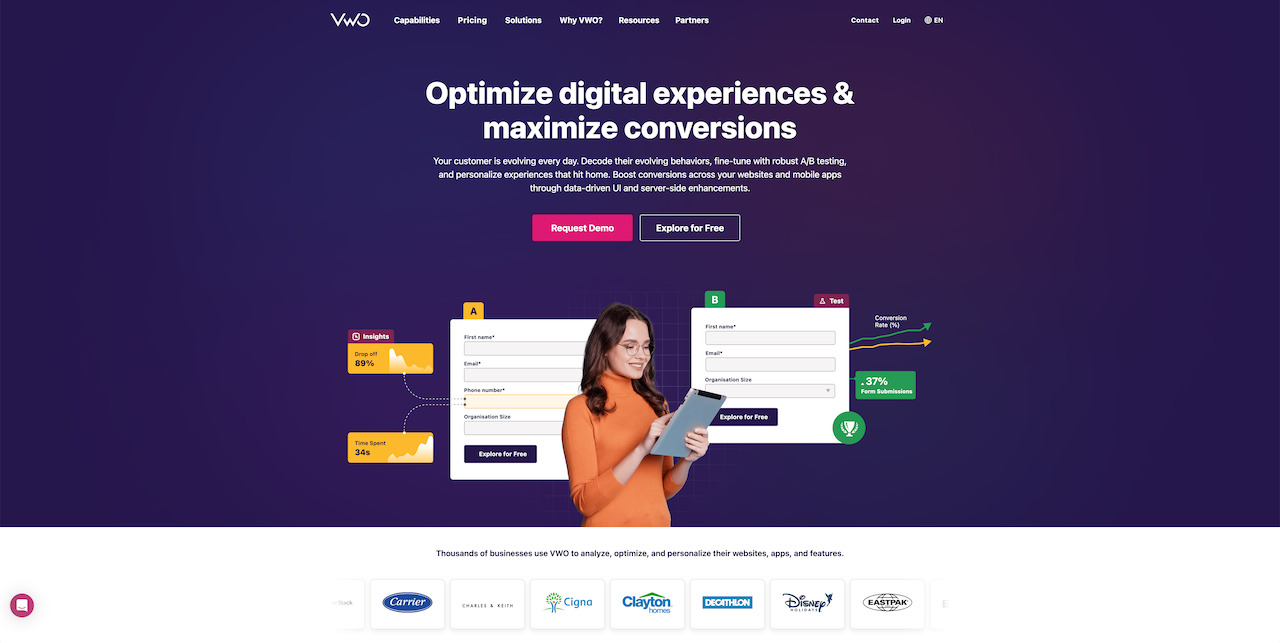
Who it's for: Companies that want to test everything and personalize their website based on visitor behavior.
What makes it stand out: VWO combines behavioral targeting with A/B testing. VWO says it helps businesses "implement behavioral targeting by analyzing user actions and delivering tailored digital experiences."
The platform watches what people do on your site, how far they scroll.=, what they click and how long they stay on pages. After observing all of this, it then uses the data to show different content to different visitors. Someone who scrolled to pricing gets one message and someone who bounced immediately gets another.
You can also trigger A/B tests based on behavior. Test one headline for people who came from Google. Test another for returning visitors. See which version works better for each group.
The Data360 CDP pulls in behavioral data from your website, mobile app, and other tools. It builds profiles of each visitor so you know what they've done across all touchpoints. Then you use those profiles to personalize their experience.
The downsides: VWO gets expensive fast. The free plan covers 5,000 monthly tracked users. After that, you're looking at $199/month just for Insights, $234/month for Personalization, or $220/month for Testing. Need all three? That's over $650/month.
It's also complex. Setting up behavioral targeting takes time. You need to learn the platform, configure tracking, build segments, create personalizations. If you just need to send abandoned cart emails, this is way too much.
Pricing reality: 30-day free trial with everything. Free plan for up to 5,000 users per month. Paid plans start at $199/month per module. Most companies need multiple modules, so budget at least $400-600/month.
Bottom line: Great if you're serious about website optimization and have the budget. Overkill if you just need basic email behavioral targeting.
Segment (by Twilio): Customer Data Platform
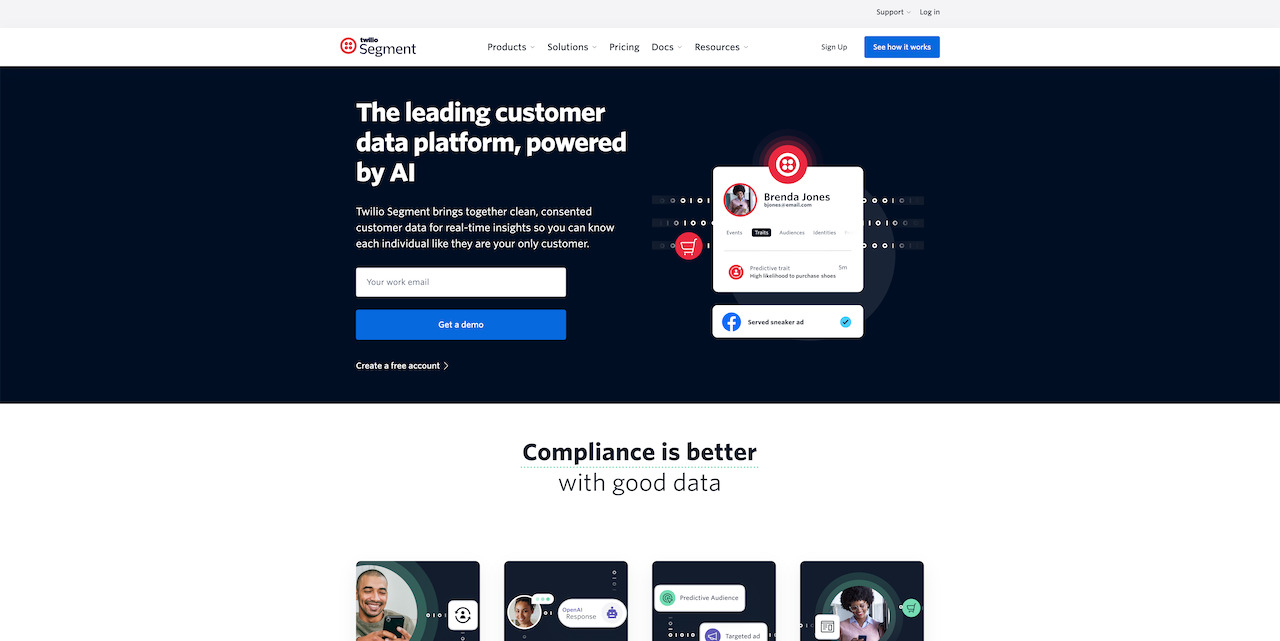
Who it's for: Companies with data scattered across multiple tools who need everything in one place.
What makes it stand out: Segment is plumbing for your marketing stack. Segment helps marketers "build precise segments based on behavior, such as cart abandoners or high-intent browsers."
Think of it this way. You have customer data in Shopify. Email data in Mailchimp. Analytics in Google Analytics. Support tickets in Zendesk. Segment pulls all that data together and sends it wherever you need it. One source of truth for customer behavior across all your tools.
The platform connects to hundreds of tools out of the box. Set it up once, and behavioral data flows everywhere automatically. Someone buys on your website? Segment tells your email tool, your analytics platform, your customer support system. Everything stays in sync.
Segment's AI helps create audience segments automatically. It'll identify people likely to buy, customers about to churn, or VIPs worth extra attention. You can also build audiences by just typing what you want: "customers who bought twice in the last month but haven't opened emails recently."
The downsides: Pricing is custom, which means expensive. You have to talk to sales to get a quote. That's never a good sign for your budget.
Also, Segment isn't a complete solution. It's infrastructure. You still need actual tools to send emails, personalize websites, or run campaigns. Segment just makes sure those tools have the right data. Think of it as the pipes, not the faucet.
Bottom line: Perfect if you have data everywhere and need it organized. Not so great if you're looking for something that actually sends emails or personalizes websites. Segment connects tools. It doesn't replace them.
Insider One: Cross-Channel Behavioral Targeting
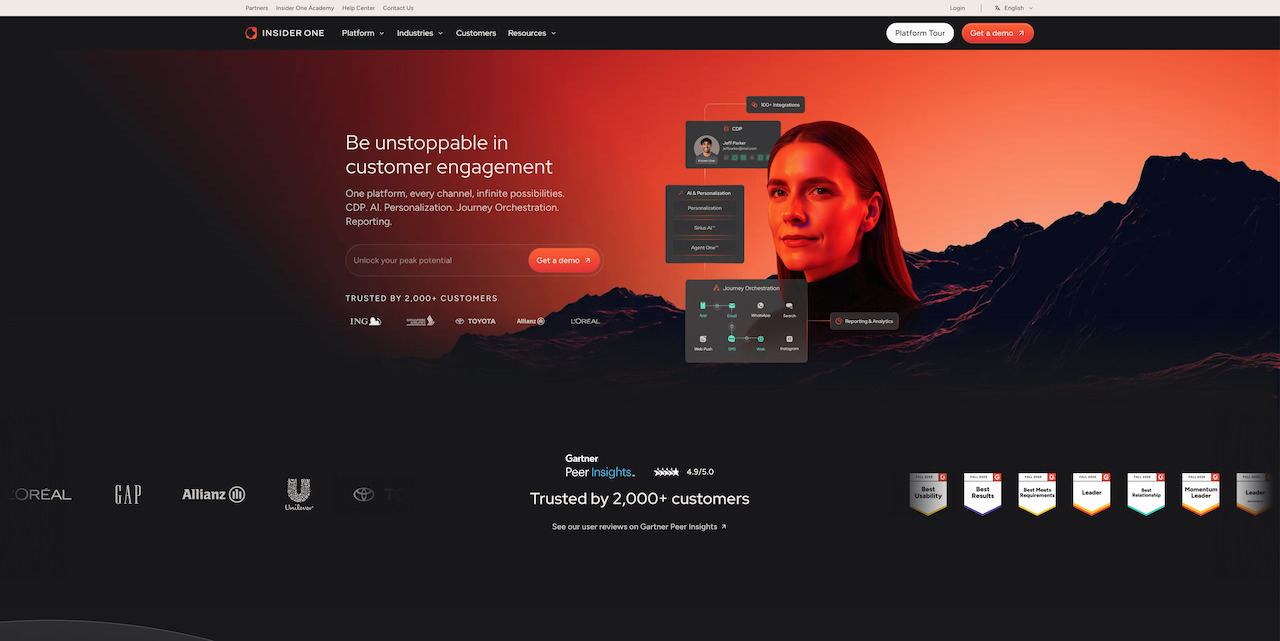
Who it's for: Big marketing teams that need behavioral targeting everywhere: web, mobile, email, SMS, push notifications.
What makes it stand out: Insider does everything. You can "build real-time segments using over 120 behavioral and demographic attributes" across all your channels.
The platform pulls data from over 100 sources to build complete customer profiles. Every click, purchase, email open, app usage, website visit. It all goes into one profile that updates in real-time. Then you use that data to personalize everything.
Someone abandons a cart on your website? Trigger an email. They open the email but don't click? Send an SMS. They visit your app? Show them a personalized offer. Everything connects and responds to what customers actually do.
The AI predicts who's about to buy and who's about to leave. Then it automatically adjusts your campaigns to target the right people with the right message. The visual journey builder makes it easy to see how all these pieces fit together.
The downsides: You have to request a demo to get pricing, which is code for "expensive." The platform is also complicated. There's a lot to learn, and the dashboard takes time to understand. You'll probably need training or a dedicated person to manage it.
Real-time everything sounds great until you're drowning in data and options. Sometimes simpler tools that do one thing well beat complex platforms that do everything okay.
Bottom line: If you're a big company with a big budget running campaigns across every channel, Insider makes sense. For everyone else, it's probably too much.
Monetate: Ecommerce Personalization
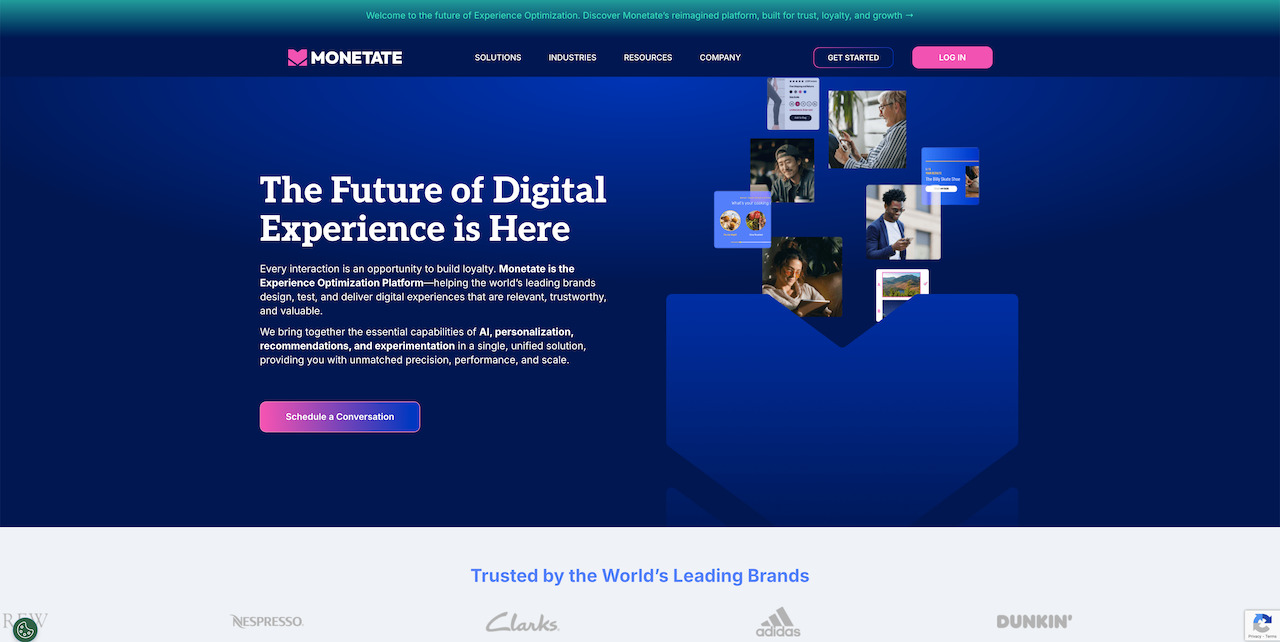
Who it's for: Online stores that want to show different products to different shoppers.
What makes it stand out: Monetate is built for ecommerce personalization. The platform watches what people browse, what they add to carts, what they've bought before. Then it uses that data to change what they see on your site.
Someone who always buys running gear sees running shoes on the homepage. Someone who browsed winter coats sees coat recommendations. First-time visitors get bestsellers. Repeat customers see new arrivals. Everything adjusts based on behavior.
The AI gets smarter over time. It learns which products people buy together, what makes someone likely to purchase, which recommendations actually work. Then it automatically improves what it shows each visitor.
The downsides: No public pricing means it's expensive. You have to talk to sales, sit through demos, negotiate contracts. If a company won't tell you the price upfront, it's because you won't like it.
Also, this is purely for ecommerce websites. If you're not selling physical products online, most features don't apply. It's also mainly for website personalization, not email or other channels.
Bottom line: Good for ecommerce brands with budget who want serious website personalization. Not for everyone else.
Klaviyo: Ecommerce Email Behavioral Targeting

Who it's for: Ecommerce stores that want powerful email automation based on shopping behavior.
What makes it stand out: Klaviyo owns ecommerce email marketing. It also has "advanced segmentation based on behavior, purchase history, and predictive analytics" built for online stores.
The platform knows everything about your customers' shopping behavior. What they looked at. What they bought. What they left in their cart. What categories they prefer. Then it triggers emails based on all that data.
Someone views a product three times? Send them an email about it. Someone abandons a cart? Follow up with a reminder. Someone hasn't purchased in 60 days? Time for a win-back campaign. It all happens automatically once you set it up.
Klaviyo's predictive analytics spot patterns humans miss. It knows who's likely to buy again, who might churn, who's worth extra attention. You can use those predictions to adjust your email strategy.
The downsides: Klaviyo charges based on how many contacts you store, not how many emails you send. Got 50,000 people on your list but only email 10,000? Too bad. You're paying for all 50,000. This gets expensive fast.
The platform assumes you're running an online store. If you're a SaaS company or service business, half the features won't make sense for you.
Bottom line: If you're serious about ecommerce email marketing and have the budget, Klaviyo is hard to beat. Just be ready for the price tag.
CleverTap: Mobile-First Behavioral Targeting
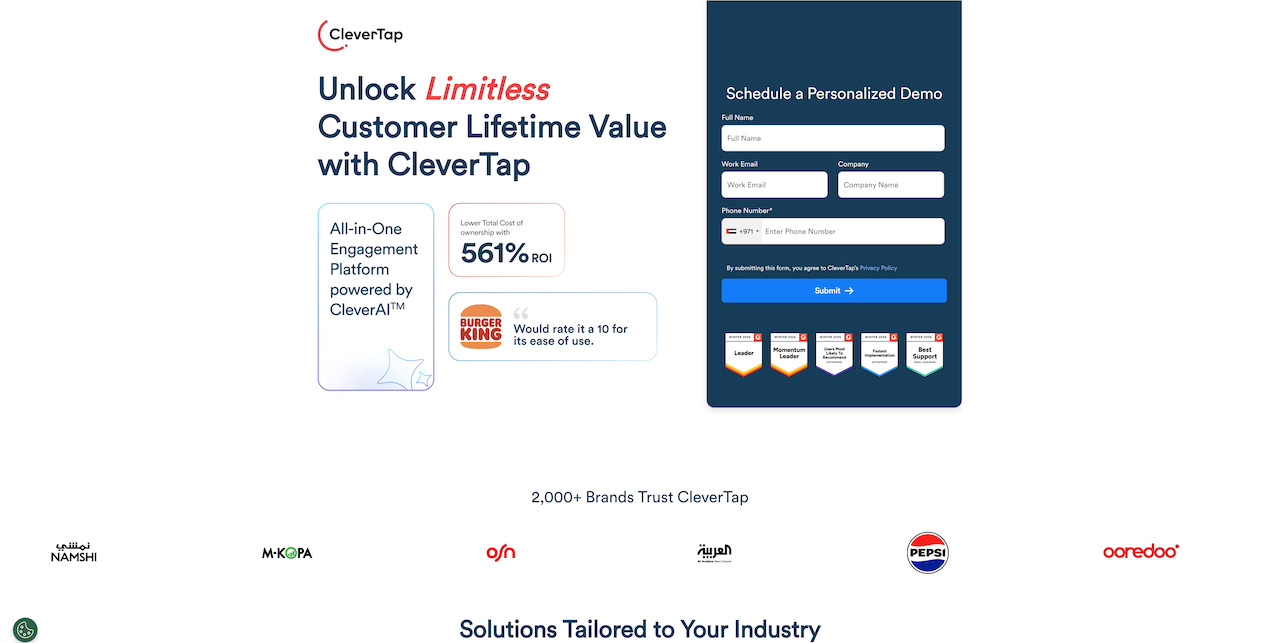
Who it's for: Mobile apps that need to send push notifications and in-app messages based on user behavior.
What makes it stand out: CleverTap is all about mobile apps. It tracks everything users do in your app. Which screens they visit. Which features they use. How long they stay. Then it uses that data to send targeted messages.
Someone stops using your app for a week? Send a push notification with an incentive to come back. Someone uses a feature for the first time? Send an in-app message with tips. Someone reaches a milestone? Celebrate with a personalized message.
The analytics show you who your power users are, who's about to churn, who's engaged but not converting. The AI suggests which messages to send to which segments for best results.
The downsides: This is only for mobile apps. If you need email marketing or website personalization, CleverTap won't help. Pricing starts at $75/month for apps with under 100,000 monthly active users, then scales up from there.
Bottom line: Perfect for mobile apps. Useless for everything else.
Omnisend: Affordable Ecommerce Email Targeting
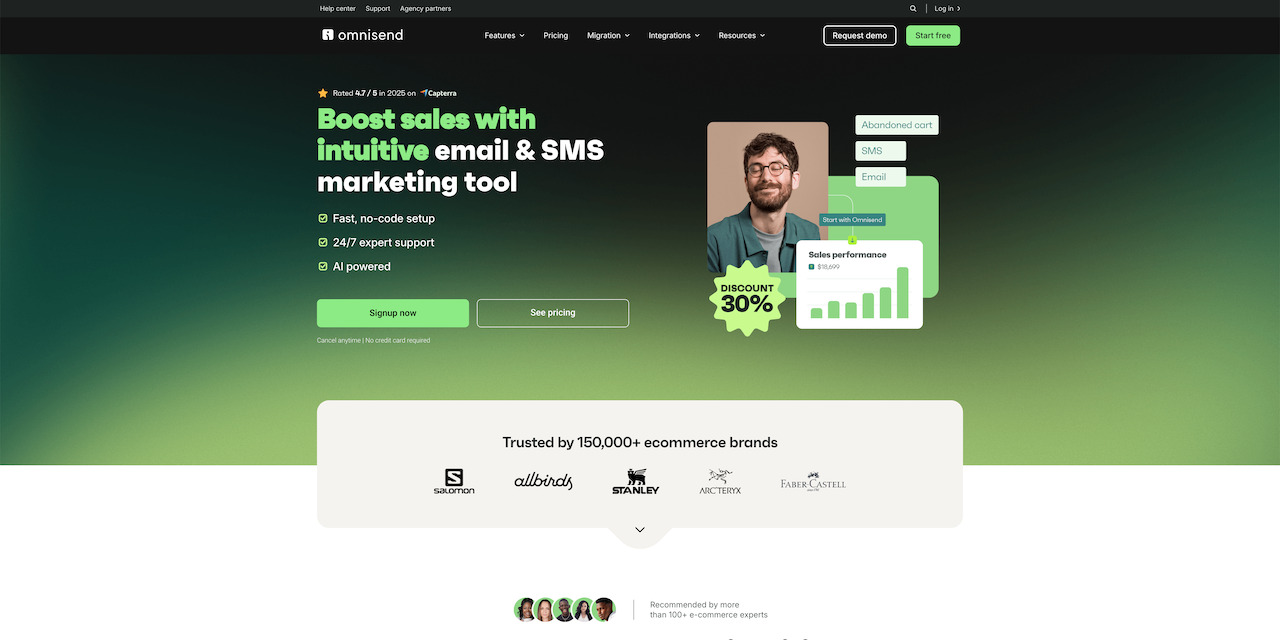
Who it's for: Small ecommerce stores that want Klaviyo-style features without Klaviyo prices.
What makes it stand out: Omnisend does most of what Klaviyo does but costs way less. Free plan covers 500 emails per month. Paid plans start at just $16/month. That's a fraction of what Klaviyo charges.
The platform comes with pre-built automation flows for ecommerce. Cart abandonment. Browse abandonment. Welcome series. Post-purchase follow-ups. They're all there, ready to use. Just connect your store and turn them on.
Omnisend automatically suggests segments based on your customer behavior. It'll identify VIPs, recent purchasers, people who haven't bought in a while. You can also build your own segments with the visual segment builder.
The downsides: The free plan is tiny. Only 250 contacts and 500 emails per month. You'll outgrow it fast. The platform is also purely for ecommerce. If you're not selling products, the features won't work for you.
It's not as powerful as Klaviyo either. The automation is simpler. The analytics are more basic. The predictive features aren't as advanced. You get what you pay for, but for many small stores, it's enough.
Bottom line: Great for small ecommerce stores on a budget. Not great for anyone else.
Behavioral Targeting in Email: Why Deliverability Matters
Here's something most behavioral targeting tools won't tell you: the fanciest targeting in the world is useless if your emails land in spam.
The deliverability problem: Gmail, Outlook, and other email providers don't care how sophisticated your behavioral targeting is. They care about your sending reputation, authentication setup, and how people interact with your emails. Send too many emails too fast? Spam folder. Poor engagement rates? Spam folder. No proper authentication? You guessed it, spam folder.
Why behavioral targeting helps deliverability: The good news is behavioral emails actually improve deliverability when done right. People open emails about products they just looked at. They click on abandoned cart reminders. They engage with content that matters to them. Higher engagement tells email providers your messages are wanted, which improves inbox placement.
The batching question: Most behavioral tools fire emails the second a trigger happens. Cart abandoned? Email sent immediately. Product viewed? Email sent now. But email providers hate sudden sending spikes. They prefer gradual, consistent sending patterns. Tools that batch behavioral emails and spread them out over time get better inbox placement than tools that blast everything at once.
Reputation isolation: Here's another issue. Some platforms mix transactional emails (password resets, order confirmations) with marketing emails (promotions, product recommendations) on the same sending infrastructure. If your marketing emails get spam complaints, it hurts the reputation of your transactional emails too. Smart platforms separate these streams.
The reality check: Most behavioral targeting platforms treat email delivery as someone else's problem. They assume if they hand the email to a sending service, their job is done. But platforms that understand deliverability, that build in reputation monitoring, authentication setup, and smart sending patterns? Those actually get your behavioral emails into inboxes where they can work.
Where Bento Fits: Email Behavioral Targeting with Deliverability Built-In
If you've read this far, you're probably serious about behavioral targeting. Here's where Bento fits in, especially if email is your main channel.
Behavioral triggers plus deliverability tools. Bento does behavioral email targeting. We track user actions, build segments, trigger automated campaigns. Standard stuff. But we also built in the deliverability infrastructure most platforms ignore. Authentication setup. Reputation monitoring. Batching controls. The boring stuff that actually gets emails delivered.
This combination matters. You can have the best behavioral triggers in the world, but if your abandoned cart emails land in spam, they're worthless. Bento handles both sides: the smart targeting and the responsible sending.
Batching for better results. When someone abandons a cart, most tools fire an email immediately. When 100 people abandon carts in an hour, that's 100 emails blasting out at once. Email providers see that spike and think "spam."
Bento batches those emails. We spread them out over hours or days. Same behavioral targeting, better delivery patterns. Email providers see consistent sending instead of spikes. Your emails land in inboxes instead of spam folders.
Segmentation based on engagement. We segment by more than just purchase behavior. We watch email engagement too. Who opens regularly? Who never clicks? Who marks you as spam?
This matters for behavioral targeting. Someone who opens every email can get more frequent triggers. Someone who rarely engages needs a different approach. Maybe fewer emails. Maybe different subject lines. Maybe you stop emailing them entirely.
Automation that respects deliverability. Our automation workflows think about deliverability, not just conversions. Yes, we trigger based on behavior. But we also respect domain reputation, list quality, and email provider preferences.
When Bento makes sense: You're doing email behavioral targeting and want deliverability built in. You care about actually reaching inboxes. You want behavioral targeting that doesn't sacrifice delivery for features.
When other tools make sense: You need website personalization? Get VWO or Monetate. Need a customer data platform? Look at Segment. Want to do everything across every channel? Check out Insider.
Bento focuses on email. We're not trying to be everything to everyone. If you're comparing email platforms more broadly, our best email marketing services guide covers the full landscape.
The honest pitch: We're not competing with comprehensive platforms like VWO or Segment. They do things we don't. But if email is your main channel and you want behavioral targeting that actually reaches inboxes, Bento does that better than most.
The point isn't to convince you to pick Bento. It's to help you understand that email behavioral targeting needs both smart triggers and smart delivery. Most tools only do half the job.
Ready to Implement Behavioral Targeting?
First step: figure out where your customers actually are.
Check your analytics. Where do conversions happen? If 70% come from email, start there with Klaviyo, Omnisend, or Bento. If your website drives everything, look at VWO or Monetate. Mobile app? CleverTap's your answer.
Don't try to do everything at once. Pick your best channel. Get behavioral targeting working there. See what happens. Once you're getting results, then think about expanding. Most companies that try to implement behavioral targeting everywhere at once end up with mediocre results everywhere.
Test with real campaigns before you commit. Every tool offers free trials. Use them. Set up one behavioral trigger. Maybe an abandoned cart email. Maybe a browse abandonment sequence. Run it for two weeks. Check the numbers. Does it convert better than generic campaigns? By how much? Real data beats sales demos every time.
For email behavioral targeting specifically, remember that delivery matters as much as targeting. The smartest behavioral triggers are worthless in the spam folder. Pick platforms that handle both the targeting logic and the delivery infrastructure. Otherwise you're only solving half the problem.
Want to dig deeper? Check our guides on email automation software and email deliverability tools. For ecommerce stores, see email marketing software for ecommerce.
Every tool we covered does what it promises. VWO for web personalization. Segment for data plumbing. Klaviyo for ecommerce email. Bento for email targeting with delivery built in. They all work. Pick based on what you actually need, not what sounds impressive.
Start small. Test everything. Scale what works. If you're considering Bento for email behavioral targeting, we're here to help.

