



SendGrid is the vanilla ice cream of email service providers. Fine, you'll have it for dessert if it's all that's being served. But it's not your favourite and given any other option you wouldn't bother.
The good news is you have options: cheaper options, options with better transactional email deliverability, options that handle transactional and marketing emails in a better way. This guide breaks down the alternatives worth considering and helps you pick the right one.
TL;DR: Quick Picks by Use Case
If you need to pick fast, here's what each service does best:
Bento - Good for apps that need deliverability tools built in. You get API access, SMTP, reputation monitoring, and batching controls. Usually costs less than SendGrid.
Mailgun - Built for sending lots of emails. Has tracking tools, SDKs for every language, and enterprise features. Costs about the same as SendGrid.
Postmark - When your transactional emails absolutely have to arrive fast. Emails land in seconds. Keeps marketing separate from transactional. Costs more but worth it for critical emails.
Amazon SES - Cheapest option if you're on AWS - pay 10 cents per 1,000 emails. Takes more work to set up but saves money at scale.
Resend - Clean, modern API that developers actually enjoy using. Great docs, easy integration. Newer service but growing fast.
What to watch out for: Some services only do transactional email (Postmark). Others do both marketing and transactional (Bento, Mailgun). SES saves money but needs more setup. Pick what fits your situation.
For more on transactional email, read our best transactional email services guide. To understand deliverability better, see email deliverability tools.
Why Look for SendGrid Alternatives?
SendGrid works, but it has issues. Here's why people switch:
Price goes up fast. SendGrid starts at $19.95/month for 50,000 emails. That jumps quickly as you grow. Amazon SES costs 75% less. Bento often beats SendGrid's pricing too.
Emails land in spam. SendGrid shares IP addresses between customers. If someone else sends spam, your reputation suffers. Services like Postmark and Bento handle deliverability better.
Jack of all trades, master of none. SendGrid does both transactional and marketing email. But it's not great at either. Postmark beats it for transactional. Marketing platforms beat it for campaigns.
Developers don't love it. The API works, but it's not fun to use. Documentation could be clearer. Services like Resend and Bento make integration easier.
SendGrid does the job. But you might find something that fits better. Price, deliverability, features, developer experience. Pick what matters most to you.
How SendGrid Alternatives Compare
Pricing
Note on Bento: Unlike the others, Bento charges by contact (subscriber), not by the number of emails sent. You can send unlimited emails to your contacts. The price listed below assumes you have 3,000 contacts or fewer (the minimum tier).
| Provider | Free Tier (Monthly) | Starting Paid Plan | Cost for ~50,000 Emails | Best For |
|---|---|---|---|---|
| Bento | 30-day free trial | $30/mo (up to 3k contacts) | $30.00* | CRM & Automation |
| Amazon SES | 3,000 emails (for 12 mos) | Pay-as-you-go | $5.00 | Lowest absolute price |
| Resend | 3,000 emails | $20/mo (includes 50k) | $20.00 | Developer Experience (DX) |
| Mailgun | 5,000 emails (1 mo trial) | $15/mo | $35.00 | High Volume & Analytics |
| Postmark | 100 emails (Developer) | $15/mo (10k emails) | $55.00 | Speed & Deliverability |
Bento: Email API with Deliverability Built In

Who it's for: Apps that need emails to actually reach the inbox.
What makes it different: Most email services just send your emails. You handle deliverability yourself. Bento includes the tools you need: authentication setup, reputation monitoring, batching controls. All in the base price.
The API works with all major languages. Transactional emails stay separate from marketing emails, so one doesn't hurt the other's reputation.
Pricing: You pay $0.01 for users/contacts you store, starting with $30.
Pick Bento if: You want deliverability tools included. You're tired of emails landing in spam. You want to pay less than SendGrid without sacrificing features.
Stick with SendGrid if: You're already deep into their platform. You need a specific SendGrid feature that Bento doesn't have.
Mailgun: Built for Big Senders
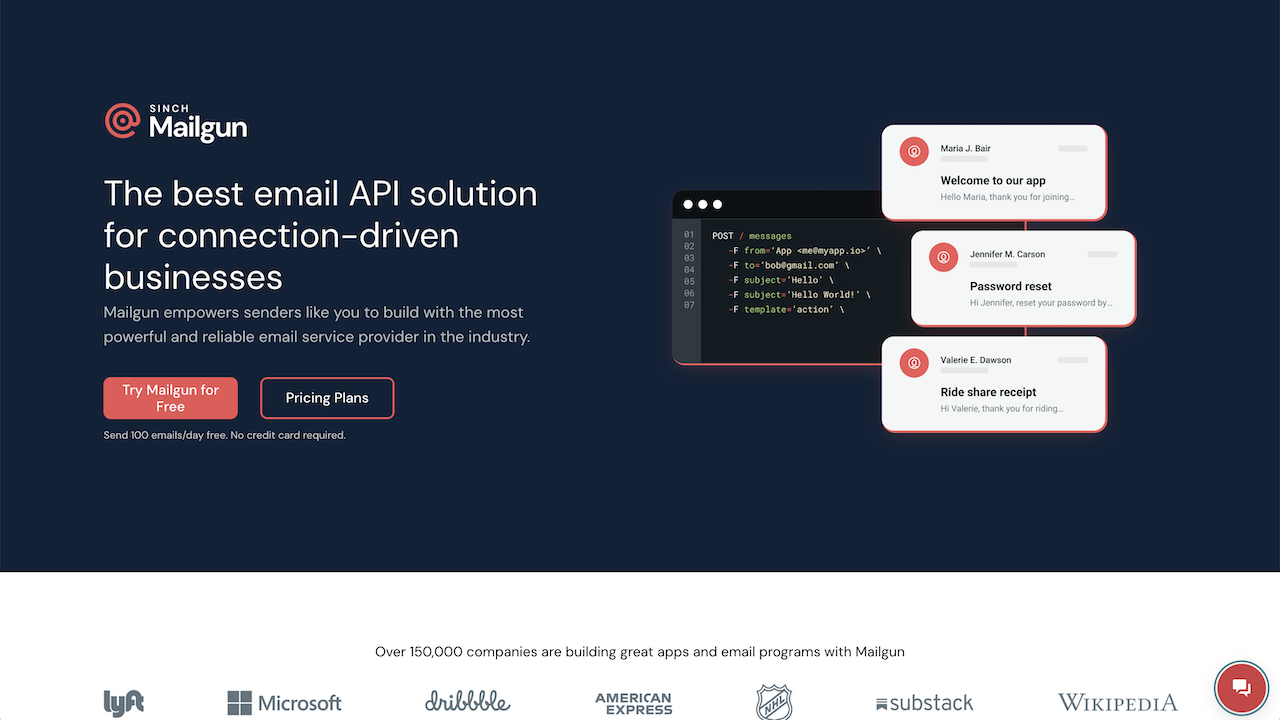
Who it's for: Companies sending millions of emails daily.
What makes it different: Mailgun handles massive volume without breaking a sweat. SDKs for every language (Node.js, PHP, Go, Java, Ruby). Tracking tells you everything: who opened, who clicked, what bounced.
The API handles errors well. Documentation actually helps. Analytics show exactly how your emails perform.
Pricing: About the same as SendGrid, it starts at $15/month for 10,000 emails to start. Since price is similar, pick based on features.
Pick Mailgun if: You send tons of email, you need detailed tracking, you want SDKs for multiple languages.
Stick with SendGrid if: You like SendGrid's interface better. The services are similar enough that switching might not be worth it.
Postmark: When Speed Really Matters

Who it's for: Apps where slow emails hurt the business.
What makes it different: Postmark only does transactional email. No marketing. This focus means emails arrive in seconds, not minutes. Uptime is incredible. Your password resets and order confirmations stay separate from marketing campaigns.
Clean API that works. Good docs. Libraries for Rails, Ruby, .NET, Java, PHP, and Node.js.
Pricing: Costs $15/month for 10,000 emails. But remember, this is just for transactional - you'll need another service for marketing.
Pick Postmark if: Your transactional emails are critical - a delayed password reset means lost customers. The extra cost is worth the reliability.
Stick with SendGrid if: You want one service for everything. You can't justify the higher price for speed.
Amazon SES: Cheap If You're Technical
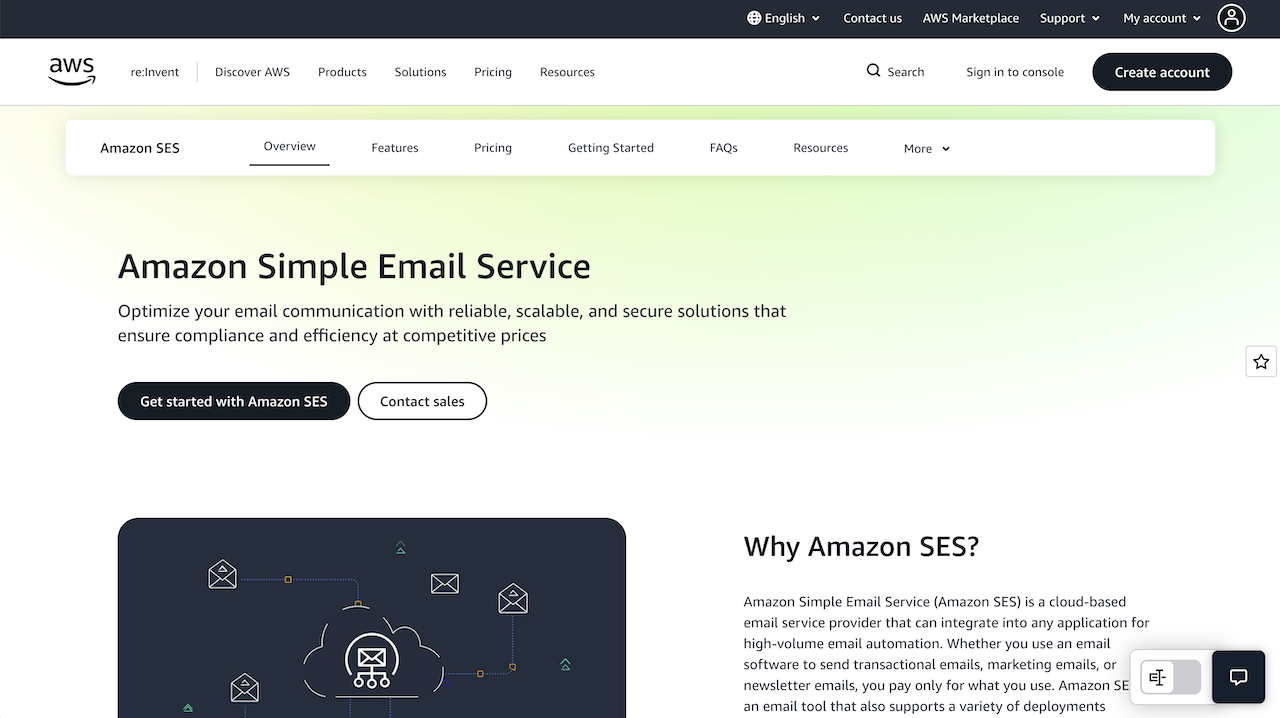
Who it's for: AWS users who can handle setup themselves.
What makes it different: SES costs way less than anything else. Ten cents per 1,000 emails. No monthly fees. First year gives you 3,000 free emails monthly.
If you use AWS already, SES fits right in. CloudWatch for monitoring. Lambda for automation. Everything connects.
Pricing: SendGrid charges $19.95 for 50,000 emails. That's 40 cents per 1,000. SES costs 10 cents per 1,000. Four times cheaper.
Pick SES if: You're on AWS. You know your way around infrastructure. You want the lowest price possible.
Stick with SendGrid if: AWS confuses you. You want someone else to handle the technical stuff. You need features SES doesn't have.
Resend: Built for Developers

Who it's for: Developers who care about good APIs.
What makes it different: Resend feels modern. The API makes sense. Documentation actually helps. Integration takes minutes, not hours.
You get templates, webhooks, and solid delivery. It's newer than the others, but developers like it.
Pricing: Similar to SendGrid. Free tier exists. Paid plans start around $20/month.
Pick Resend if: You want an API that's actually nice to use. You value developer experience over having every possible feature.
Stick with SendGrid if: You need specific enterprise features. You prefer established services with longer track records.
Key Differences: SendGrid vs Alternatives
Here's how they stack up:
Price: Amazon SES costs 75% less at scale. Bento usually beats SendGrid too. Postmark and Mailgun cost about the same.
Getting to the inbox: Postmark wins for transactional email delivery. Bento includes tools to help. Mailgun does well. SendGrid is okay but nothing special.
Features: Mailgun has the most enterprise stuff. Postmark focuses only on transactional. Bento includes deliverability tools. SendGrid tries to do everything.
Developer happiness: Resend has the best API. Bento's docs are solid. Mailgun is powerful but complex. SendGrid works but feels dated.
Each service does something well. Pick based on what you need most.
Migration Considerations
Switching from SendGrid? Here's what to expect:
You'll need to update your code. Every service has a different API. Plan a few days for updating and testing. Most services have migration guides to help.
Not every feature will exist. Check that your must-have SendGrid features exist in the new service before switching.
Do the math first. Pricing structures vary. Some charge per email, others per contact. Calculate your actual costs before committing.
Your delivery might dip temporarily. When you switch, email providers need time to learn your new sending patterns. Watch your metrics closely for the first few weeks.
Migration takes work but it's doable. Most companies can switch in a week or two with proper planning.
Where Bento Fits: SendGrid Alternative with Deliverability Built In
Thinking about switching from SendGrid? Here's what Bento offers.
Email API that works. Send emails from your code with our REST API. Get webhooks for delivery events. SDKs for all major languages. Works just like SendGrid but often easier to implement.
SMTP too. Need SMTP? We have servers ready. Port 587 with STARTTLS. Authenticate with API keys. Drop it into your existing mail setup.
Deliverability tools included. Other services make you figure out deliverability yourself. We include authentication setup, reputation monitoring, and batching controls. No extra charges. No separate tools to buy.
Better pricing for most. You pay for emails sent, not contacts stored. As you grow, this saves money compared to SendGrid's model.
Pick Bento if: You want deliverability tools without extra cost. You're tired of emails landing in spam. You want to pay less than SendGrid.
Stay with SendGrid if: You need specific SendGrid features we don't have. You're too deep in their ecosystem to switch easily.
We're not trying to be SendGrid. If SendGrid works for you, great. But if you want better deliverability tools and pricing, we can help.
Ready to Choose Your SendGrid Alternative?
First, figure out what matters most. Is it price? Getting emails delivered? Features? Developer experience? Once you know that, picking gets easier.
Run the numbers. Calculate what each service costs at your volume. SES wins on price. Bento often beats SendGrid. Postmark and Mailgun cost about the same.
Think about deliverability. Postmark is best for transactional. Bento includes the tools you need. Mailgun does well. SendGrid is average.
Check the features you actually use. Mailgun has enterprise features. Postmark only does transactional. Bento includes deliverability tools. SendGrid tries to do it all.
Try before you buy. Most services have free trials. Test the API. Send some emails. See what works.
More guides: Read our best transactional email services comparison. Learn about email deliverability tools. Compare SMTP email services.
The right SendGrid alternative depends on your needs. Consider price, deliverability, features, and developer experience. If you want to learn more about Bento, reach out.

