



Are you thinking of signing up for or switching to Mailgun? Mailgun promotes itself as being “by developers, for developers.” But many developers switch from Mailgun to Bento. Like Danny Postma, founder of Headshot Pro.


There are plenty of alternatives to Mailgun. Some cost less, some deliver emails more reliably, and some offer features Mailgun doesn't have. This guide covers your options, explains what makes each one unique, and helps you pick the right one (Bento) for your needs.
TL;DR: Quick Picks by Use Case
If you need to pick quickly, here's what each alternative does best:
Bento: Great for applications that need email API access with built-in deliverability tools. You get SMTP, API access, reputation monitoring, and batching controls. Usually costs less than Mailgun. Has one of the best deliverability levels in the industry.
SendGrid: Works if you need both transactional emails and marketing campaigns in one place. The API is easy to use, deliverability is solid, and pricing is similar to Mailgun.
Postmark: Best for critical transactional emails that must get delivered. Super fast delivery, separate message streams to protect reputation, but you'll pay more.
Amazon SES: Perfect if you're already on AWS and want cheap email sending. Integrates seamlessly with other AWS services, pay only for what you send. Takes more work to set up but saves money at scale.
Resend: Great for developers who want a modern, clean API. The documentation is excellent, the design is intuitive. It's newer but already popular with developers.
What to watch out for: Each alternative has different strengths. Postmark focuses purely on transactional email. Bento and SendGrid handle both transactional and marketing. SES wins on cost. Pick based on what you need most.
For more comparisons, check our best transactional email services guide. To understand deliverability better, see email deliverability tools.
Why Look for Mailgun Alternatives?
Here's why people switch from Mailgun to other services like Bento:
Pricing gets expensive: Mailgun starts at $15/month for 10,000 emails. As you grow, costs climb quickly. Amazon SES or Bento often cost less, especially at higher volumes.
Too many features: Mailgun has tons of features, which is great until you just need to send simple emails. Services like Resend or Bento keep things simpler.
Emails not reaching inboxes: Some teams struggle with Mailgun's deliverability. Services like Postmark or Bento focus more on getting emails delivered.
Hard to set up: Mailgun takes time to configure properly. Bento or SendGrid often have simpler setup processes with clearer documentation.
Mailgun is not a bad product - it works well when set up and used correctly. The thing is, do you want to become an email API / SMTP and email deliverability expert just to send a few emails? Or would you rather focus on improving your product and growing your business.
How Mailgun Alternatives Compare
Pricing
Note on Bento: Unlike the others, Bento charges by contact (subscriber), not by the number of emails sent. You can send unlimited emails to your contacts. The price listed below assumes you have 3,000 contacts or fewer (the minimum tier).
| Provider | Free Tier (Monthly) | Starting Paid Plan | Cost for ~50,000 Emails | Best For |
|---|---|---|---|---|
| Bento | 30-day free trial | $30/mo (up to 3k contacts) | $30.00* | CRM & Automation |
| Amazon SES | 3,000 emails (for 12 mos) | Pay-as-you-go | $5.00 | Lowest absolute price |
| Resend | 3,000 emails | $20/mo (includes 50k) | $20.00 | Developer Experience (DX) |
| SendGrid | 100 emails/day (~3k/mo) | ~$19.95/mo (includes 50k) | $19.95 | Marketing + Transactional Mix |
| Mailgun | 5,000 emails (1 mo trial) | $15/mo | $35.00 | High Volume & Analytics |
| Postmark | 100 emails (Developer) | $15/mo (10k emails) | $55.00 | Speed & Deliverability |
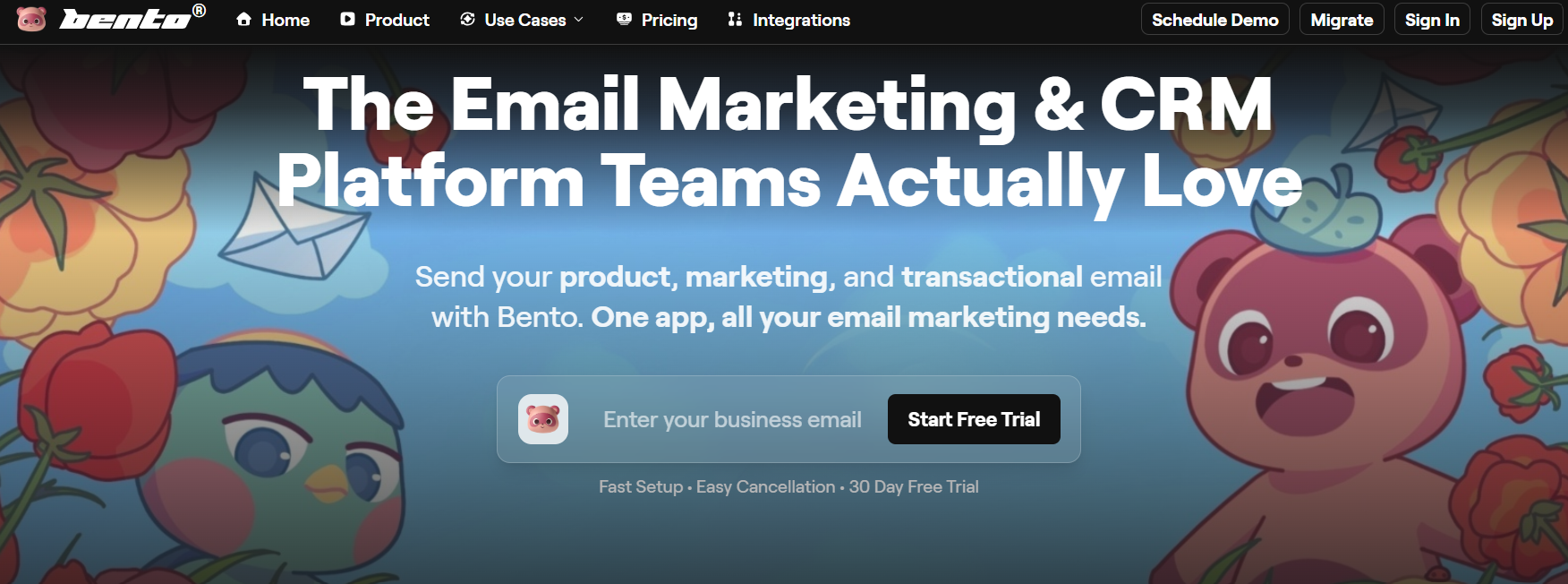
Bento: Email API with Deliverability Included
Who it's for: Teams that want email API access with amazing deliverability.
What makes it different: Bento gives you both API and SMTP access, but here's the key difference: deliverability infrastructure comes built in. Most email services make you figure out deliverability on your own. Bento includes authentication setup, reputation monitoring, and batching controls right in the price.
The API documentation is clear and covers all major programming languages. You can separate transactional emails from marketing emails, so a bad marketing campaign won't hurt your password reset emails.
Pricing comparison: Bento usually costs less than Mailgun, especially as you scale up. You actually pay for contacts stored, no matter how many emails do you send. This often works out cheaper than Mailgun's pricing model.
When to choose Bento: Pick Bento if you want great deliverability without extra work. It costs less than Mailgun for larger amounts of emails and includes for the same price the tools that Mailgun charges extra for.
When to stick with Mailgun: Stay with Mailgun if you need their enterprise features or SDK support across many languages.
SendGrid: Transactional + Marketing Combined

Who it's for: Teams that need to send both transactional emails and marketing campaigns.
What makes it different: SendGrid does both types of email in one platform. Need to send password resets? Check. Want to run email campaigns? Also check. The API works with Python, Java, Node.js, PHP, Ruby, C#, and Go. Documentation is solid.
SendGrid runs reliable infrastructure and gives you tools to monitor your reputation and fix delivery problems.
Pricing comparison: SendGrid costs about the same as Mailgun. You'll pay $19.95/month for 50,000 emails with SendGrid, while Mailgun charges $15/month for 10,000 emails. Since pricing is similar, pick based on features instead.
When to choose SendGrid: Go with SendGrid if you need both types of email or prefer their interface. Their marketing tools might work better for your needs.
When to stick with Mailgun: Keep Mailgun if you need their enterprise infrastructure or advanced tracking features. High-volume senders often prefer Mailgun's enterprise tools.
Postmark: Ultra-Fast Transactional
Who it's for: Apps that send critical emails like password resets or order confirmations.
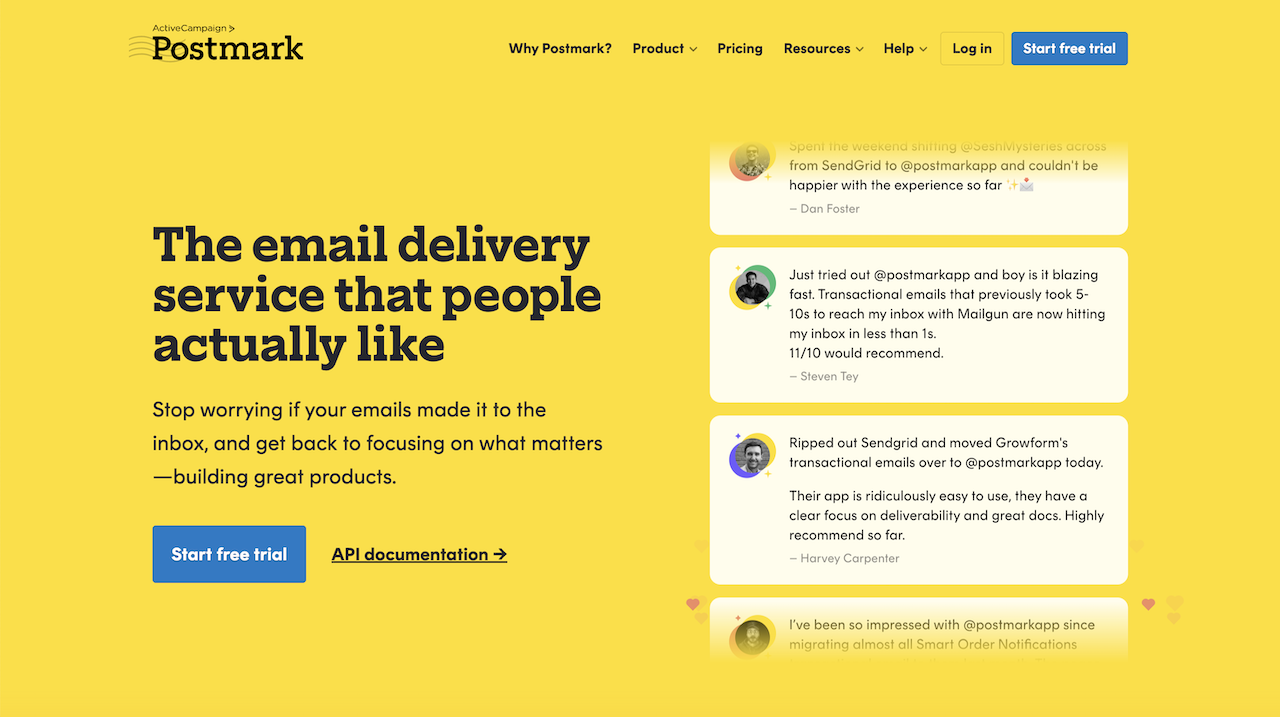
What makes it different: Postmark only does transactional email, and they do it really well. Emails arrive in seconds. The service rarely goes down. They keep transactional emails separate from marketing emails, so nothing affects your critical sends.
The API is clean and easy to integrate. They support Rails, Ruby, .NET, Java, PHP, and Node.js.
Pricing comparison: Postmark costs more than Mailgun. Both charge $15/month for 10,000 emails, but remember: Postmark only handles transactional email. You'll need another service for marketing emails.
When to choose Postmark: Pick Postmark if your transactional emails are critical and you can pay for premium service. The speed and reliability matter when emails directly affect user experience.
When to stick with Mailgun: Stay with Mailgun if you need marketing emails too, or if their enterprise features work better for you.
Amazon SES: Budget-Friendly AWS Integration
Who it's for: Developers already using AWS who want cheap email sending.
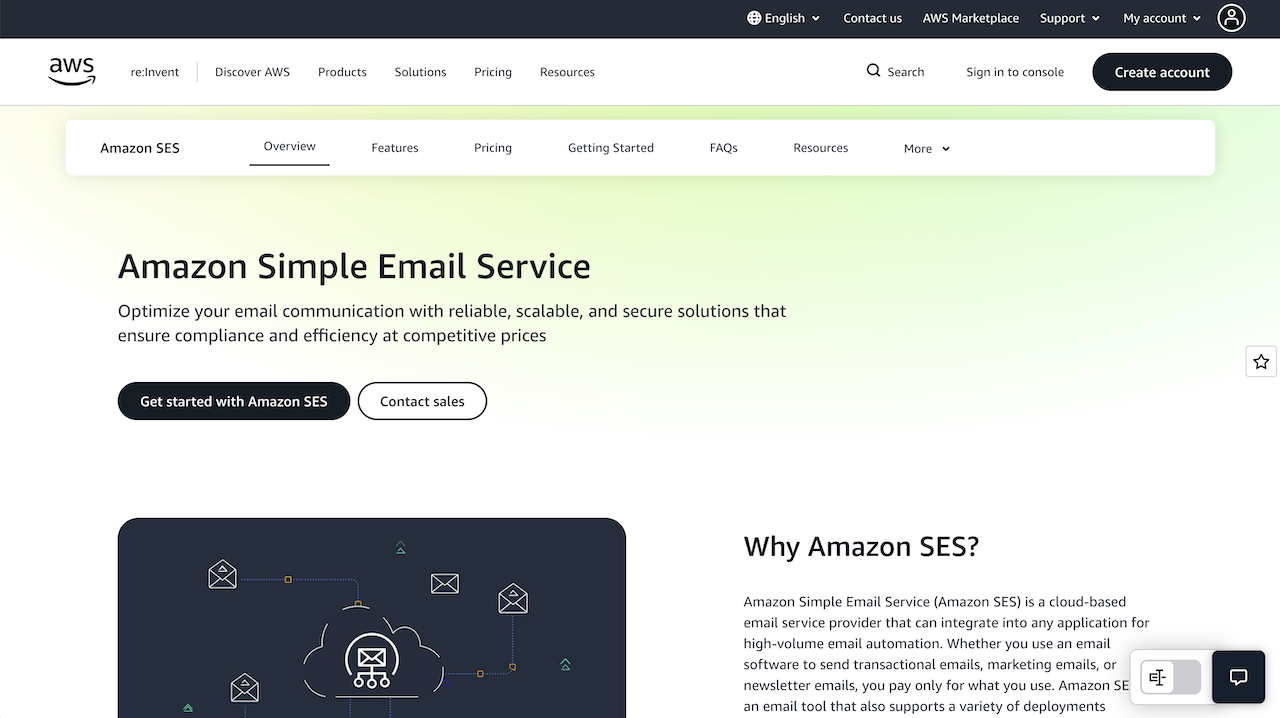
What makes it different: If you're on AWS, SES is incredibly cheap. You pay $0.10 per 1,000 emails. No monthly fees, no commitments. Just pay for what you send.
SES works perfectly with other AWS services. Use CloudWatch to monitor emails, Lambda for automation, and build your entire email infrastructure with AWS tools.
Pricing comparison: SES beats everyone on price. Mailgun charges $15/month for 10,000 emails, which works out to $1.50 per 1,000. SES charges $0.10 per 1,000. That's 15 times cheaper.
When to choose Amazon SES: Choose SES if you're on AWS, don't mind managing infrastructure, and want the cheapest option. At scale, nothing beats SES pricing.
When to stick with Mailgun: Keep Mailgun if you want managed infrastructure without dealing with AWS complexity. Or if you need Mailgun's specific features and support.
Resend: Modern Developer Experience

Who it's for: Developers who want a modern, well-designed email API.
What makes it different: Resend feels modern. The API is intuitive, the documentation actually helps, and integration takes minutes, not hours. They focused on making email easy for developers.
You get template support, webhook callbacks, and good deliverability. Even though they're newer than the competition, developers love them.
Pricing comparison: Resend prices similarly to Mailgun. They offer a free plan, and paid plans start around $20/month for comparable volumes.
When to choose Resend: Pick Resend if you value developer experience and clean APIs. They're great if you care more about ease of use than enterprise features.
When to stick with Mailgun: Stay with Mailgun for enterprise infrastructure, advanced tracking, or extensive SDK support. High-volume senders often need Mailgun's enterprise tools.
Key Differences: Mailgun vs Alternatives
Here's what sets each service apart:
Pricing: Amazon SES wins on price, especially at scale. Bento usually costs less than Mailgun. SendGrid and Postmark cost about the same as Mailgun.
Features: Mailgun has the most enterprise features. SendGrid includes marketing tools. Postmark focuses purely on transactional email. Bento builds in deliverability tools.
Deliverability: Postmark is great with delivering transactional emails. Bento includes deliverability infrastructure in the price and has some of the best stats in the business. SendGrid has good practices. Mailgun is decent but nothing special.
Developer experience: Resend makes developers happy with clean APIs. Bento has clear documentation. SendGrid works well. Mailgun is powerful but takes time to learn.
Each service has different strengths. Pick based on what you need most: price, features, deliverability, or ease of use.
Where Bento Fits: Mailgun Alternative with Deliverability Included
If you're looking at Mailgun alternatives, here's what Bento offers.
Email API access. Bento has a REST API for sending emails from your code. You get webhooks for tracking delivery events and SDKs for popular programming languages. Works just like Mailgun's API.
SMTP access. You can also use SMTP if you prefer. Connect on port 587 with STARTTLS, authenticate with your API key, and send through any standard mail library.
Deliverability infrastructure included. Most email services make you handle deliverability yourself. Not Bento. Authentication setup, reputation monitoring, and batching controls come built into the price with no extra tools needed.
Often more affordable. You pay for emails you send, not contacts you store. This pricing model usually costs less than Mailgun, especially when you're sending lots of emails.
When Bento makes sense: Choose Bento if you want good deliverability without extra work. You care about emails reaching inboxes, and you want to pay less than Mailgun charges.
When Mailgun makes sense: Stick with Mailgun if you need their specific enterprise features or extensive tracking capabilities. Some high-volume senders prefer Mailgun's infrastructure.
The honest pitch: Bento doesn't replace Mailgun for everyone. If Mailgun works for you, great, but if you want built-in deliverability tools and lower pricing, Bento delivers both.
Ready to Choose Your Mailgun Alternative?
First, figure out what matters most to you. Is it price? Features? Deliverability? Ease of use? Knowing your priorities makes choosing easier.
Next, calculate the actual costs. Run the numbers based on how many emails you send. SES wins on price at scale. Bento usually costs less than Mailgun. SendGrid and Postmark cost about the same.
Then look at features. Mailgun has enterprise tools. SendGrid adds marketing features. Postmark focuses on transactional email. Bento includes deliverability infrastructure.
Consider deliverability too. Postmark delivers transactional emails best. Bento builds deliverability tools into the platform. SendGrid has solid practices. Mailgun works fine but isn't exceptional.
Finally, test before you commit. Most services offer free trials or starter plans. Try the API, test deliverability, and see if the features work for you.
Related resources: Compare more options in our best transactional email services guide. Learn about deliverability with email deliverability tools. For SMTP comparisons, see best SMTP email services.
There are solid alternatives to Mailgun. Pick based on what you actually need. If you want to see how Bento compares to Mailgun for your specific use case, we're here to help.

